Your business requires routine sanitation based upon risk factors, food processing capacity, allergen concerns, and regulatory checks, plus verification documentation supporting food safety protocols, inspection results, and public health standards. The following sections detail essential sanitation program components.
Essential Summary
- Brampton food safety cleaning experts service restaurants, grocery departments, commissaries, warehouses, bakeries, schools, mobile vendors, and allergen-sensitive operations.
- They disinfect frequently contacted areas, food-contact equipment, kitchens, floors, drains, restrooms, and storage areas using sectional methods to eliminate cross-contamination.
- Verification of approved sanitizer dilution, alignment, and exposure duration is performed by trained specialists, with conclusion filed using checks, reviews, and remedial documentation.
- Sound hygiene calendars factor in risk, production rate, format changes, releases, and guidelines when designating routine, regular, and cyclical tasks by section.
- Opt for providers with HACCP, health regulatory, knowledge, WHMIS, training, coverage, credentials, colour-coded tools, and assessment-ready sanitation paperwork.
Food Safety Cleaning Requirements for Brampton Venues
Food safety cleaning is essential for any Brampton facility that manages, stores, prepares, packages, or distributes food. Apply it to your establishment if it meets the criteria for health oversight, food standards, or HACCP systems. This includes dining establishments, break rooms, distribution centers, market departments, meat shops, fish areas, stores, and food prep kitchens.
You also need documented food sanitation in warehouses, food manufacturing plants, cold storage sites, retail bakeries, school nutrition programs, banquet halls, and meal delivery hubs. Mobile and seasonal operations count too, including mobile kitchens, festival sellers, and temporary food stands. If your staff process ingredients, portion ready-to-eat items, reheat products, or store allergens, your facility needs established sanitation documentation. In Brampton, hygiene isn't optional; it's part of lawful, functional, and customer safety adherence.
What Do Brampton Cleaning Professionals Handle?
Your facility requires professional cleaners who sanitize all high-touch areas, kitchens, floors, and toilet facilities to maintain food safety compliance and public health standards. These zones receive attention due to their elevated cross-contamination potential, hazardous walking conditions, and violations of hygiene standards.
By understanding their service scope, you can make sure your facility's cleaning procedures meet compliance standards.
Disinfecting High-Touch Areas
set how frequently each surface is sanitized
validate that cleaning was adequate
Kitchen Areas, Floor Surfaces, and Bathroom Spaces
Professional cleaners in Brampton concentrate on kitchens, floors, and restrooms given that each location involves specific contamination control, slip-and-fall, and public health requirements. In industrial kitchens, you need grease removal from cooking stations, appliance surfaces, drain systems, preparation areas, and backsplashes to reduce bacterial growth and pest activity.
Floor care that is documented should equally be anticipated. Technicians scrub and extract buildup from tile grout, ceramic surfaces, and vinyl floors, then apply appropriate drying controls so you can reduce slip incidents and maintain code-compliant conditions. They also handle entryways where moisture and debris migrate indoors.
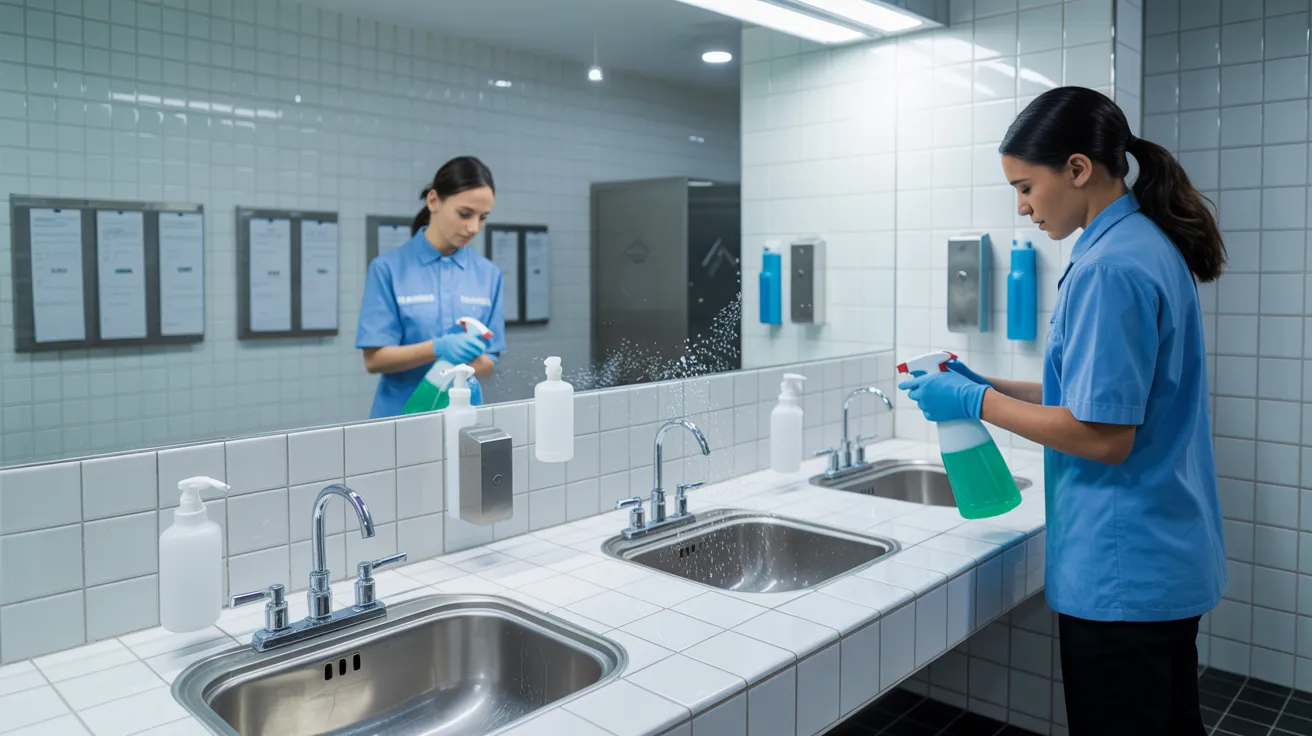
Restroom cleaning requires disinfecting touchpoints, fixtures, partitions, dispensers, and waste containers, restocking supplies and controlling odours. They also maintain restaurant cleaning supply rooms where product storage, sink cleanliness, and drain systems impact daily sanitation standards and worker protection.
Food Safety Cleaning Significance for Brampton Businesses
Brampton businesses need to establish food-safe cleaning standards for meeting legal standards and obtaining approval. You also minimize cross-contamination by cleaning and sanitizing food-contact surfaces, equipment, and high-touch areas correctly. Most importantly, you safeguard community wellness by reducing the chance of food poisoning in your establishment.
Sanitary Standards Adherence
Because Brampton food establishments operate under rigorous sanitary regulations, food safety cleaning directly influences your capability to fulfill health code requirements, defend customers, and eliminate enforcement action. You must maintain sanitized food contact points, verifiable cleaning logs, appropriate product handling, and documented employee protocols that comply with municipal and provincial inspection expectations.
Maintaining well-maintained cleaning files proves due diligence for official assessments and confirms that your operations are uniform, replicable, and monitored.
Cross-Contamination Prevention
Adhering to health code standards requires your skill in preventing cross-contamination throughout daily food handling and cleaning. You view this guide need to isolate uncooked items from finished products, clean prep surfaces between tasks, and store cleaning supplies separately from food. Structured procedures reduce transfer risks and ensure consistent compliance during inspections.
Implementing allergen segregation helps ensure major allergens don't touch communal work zones, bins, or devices. Deploy dedicated cutting boards, color-coded tools, and clear tool marking so staff don't mix items while preparing or distributing. Require handwashing after handling fresh proteins, aquatic items, egg products, or allergen materials. Refresh cleaning cloths often, and verify sanitizer strength with test strips. When your team learns these guidelines every shift, you establish a more hygienic, safer workplace that meets Brampton's food safety expectations regularly.
Community Health Protection
When sanitation efforts weaken, you don't only risk a failed inspection—you expand the chance of foodborne illness affecting customers, staff, and the larger Brampton community. You also undermine your responsibility in protecting public health, especially in busy food facilities where pathogens travel quickly through surfaces, equipment, and touchpoints.
You must implement sanitation protocols that remove soils, effectively sanitize, and verify results. This involves maintaining exposure times, utilizing authorized sanitizers, recording schedules, and coaching staff to meet health-unit expectations. These initiatives promote pathogen control by suppressing pathogens before affecting food surfaces or hands. In Brampton, robust sanitation protects at-risk groups, curtails outbreak likelihood, and proves your diligence. When you adhere to proper protocols, you go beyond regulations—you substantially reduce risk and advance safer food handling across the region.
How Can Cleaning Practices Ensure Food Safety Compliance?
Maintaining thorough cleaning protocols supports food safety compliance by decreasing contamination threats, preventing pathogen multiplication, and keeping your facility aligned with sanitation requirements under HACCP-based programs and public health regulations. You validate that product-contact areas stay visibly clean and microbiologically controlled, enabling documented preventive controls and inspection readiness.
Comprehensive cleaning also enhances allergen prevention by eliminating residues that can cause undeclared allergen exposure. When you match verified sanitation methods with safety training, your staff can implement uniform procedures, use approved chemicals appropriately, update records accurately, and manage variations ahead of they escalate. Ongoing cleaning promotes audit trails, validates remedial measures, and exhibits commitment in audits. Moreover, it supports you maintain product quality, preserve regulatory compliance, and minimize the possibility of punitive measures, market recalls, customer complaints, and avoidable public health risks.
Finding When to Arrange Commercial Cleaning
You'll get the best results from cleaning plans that reflect risk, production volume, and regulatory requirements rather than a rigid calendar system alone.
risk levels, production volumes, or regulatory standards change
Selecting the Right Brampton Cleaning Experts: Key Considerations
Begin by evaluating providers based on sanitation compliance standards—not solely on price alone. You should confirm that each organization comprehends CFIA, public health, and HACCP-based requirements applicable to your facility. Request proof of insurance, WHMIS compliance, staff training documentation, and oversight procedures. Assess whether technicians recognize cross-contamination hazards, chemical handling protocols, and verifiable sanitation records.
You must also evaluate business consistency and accountability. Seek references from food facilities in Brampton, then assess response speed, corrective processes, and communication quality. Ensure the company enables supplier checks and can provide inspection-compliant records when authorities or third parties demand verification. Verify equipment is maintained, color-coded items are deployed correctly, and site-specific hazards are understood. A reputable service protects compliance, product integrity, and your market standing.
What aspects should a sanitation plan include?
Create a written plan that defines every sanitation task, standard, and responsibility before production starts. You should document cleaning schedules, authorized products, mixing ratios, exposure periods, equipment, and testing procedures for each zone, surface, and piece of equipment. Don't forget to add pre-operational inspections, corrective actions, and employee training requirements.
Your strategy should also address cross-contamination controls, waste handling, pest-prevention measures, and documented schedules for restrooms, drains, floors, and food-contact areas. Describe how you'll keep raw and ready-to-eat processes separate, facilitate ingredient tracking, and maintain accurate allergen labeling through validated cleaning between product changes. You should assign accountability, keep signed records, and assess results against regulatory standards, HACCP controls, and customer requirements. When gaps appear, modify procedures immediately and retrain staff.
Regular Posed Inquiries
Are sanitation providers available for nighttime operations in Brampton properties?
Yes, you can book sanitation coverage to support overnight shifts in Brampton facilities. You'll organize overnight sanitation around production schedules, access requirements, and personnel needs. Providers generally create overnight logistics to reduce interruption, maintain standards, and record finished tasks. You should verify response times, management, lockout protocols, and disposal procedures before starting service.
Can Brampton cleaning experts handle emergency spill response?
Yes, you can locate Brampton cleaning professionals providing spill response options. They handle hazardous incidents, assess dangers, contain affected zones, and begin swift decontamination to reduce risk and avoid operational impact. You should confirm timeframes, credentials, safety protocols, and waste procedures. If your facility must meet compliance standards, select a service that tracks incidents, follows procedures, and supports verification.
Can plant-based disinfectants be deployed safely on surfaces contacting food?
Yes, plant-based sanitizers can be safe for food-contact surfaces if you choose items marked food-safe and complying with regulations. You should confirm contact duration, dilution rates, and rinsing needs before implementation. Many botanical formulations decrease harsh chemical exposure, but you still need proof of efficacy against harmful bacteria. To ensure residue-free conditions, you should adhere to manufacturer instructions exactly and verify the disinfecting agent complies with food sanitation requirements.
Can cleaning schedules be customized for production fluctuations?
Yes, you can adjust cleaning schedules for seasonal production changes. You should adapt timing, staffing, cleaning agents, and confirmation procedures to align with seasonal workflows while sustaining regulatory adherence. You'll lower operational delays by planning sanitation around line changes, maximum output, and operational patterns. You should additionally update procedural documents, instruction programs, and environmental testing to account for seasonal hazards, novel allergens, or elevated soil levels. Ongoing evaluations ensure your strategy effective.
Do professional cleaners instruct your team in sanitation best practices?
Absolutely, commercial cleaners regularly deliver staff training on sanitation best practices. Your team receives instruction on correct chemical handling, contact times, contamination avoidance, machine takedown, and documentation. They generally match instruction with HACCP, GMP, and CFIA or local public health standards. Many conduct sanitation audits to verify compliance, pinpoint weaknesses, and reinforce corrective actions. This helps you maintain consistent procedures, pass inspections, and lower contamination dangers routinely.
Conclusion
Partnering with Brampton commercial cleaning and food safety professionals means more than cleaning—it guarantees your operation meets inspection standards and your protocols are defensible. From processing facilities to kitchens, each sanitized surface and maintained corner lessens contamination risk and prevents major expenses. By scheduling maintenance on appropriate schedules and executing a comprehensive cleaning strategy, you protect staff, clients, and your image. In a heavily regulated sector, sanitary conditions are non-negotiable—they're vital to proper management.